We all get there, don't we? That moment when tiny print on a menu starts to look like ancient hieroglyphs. Or when you're constantly moving your head up and down, trying to find that magical "sweet spot" in your glasses just to see your computer screen, then your colleague, then the clock on the wall. For years, this was my daily dance, a frustrating routine that had me wondering if clear vision for a man my age was just a myth. I'm talking about the often-tricky world of men's progressive reading glasses.
My journey with progressive lenses felt like a series of compromises. I'd try a new pair, hopeful, only to find myself wrestling with them within days. The promise of seamless vision from near to far always seemed just out of reach. It was a cycle of neck strain, eye fatigue, and the nagging feeling that I was spending good money on something that just wasn't delivering.
Let me paint a picture. Imagine sitting down at your desk. You need to read a report on your monitor, jot down notes in a planner right below it, and occasionally glance at the whiteboard across the room. Sounds simple, right? For me, it was a gymnastic routine for my head and neck. My old progressive lenses had such narrow bands of clarity. The reading area felt tiny, stuck way down low, forcing me to crane my neck uncomfortably just to see a full paragraph.
And then there was the mid-range. That crucial distance for my computer screen? It was almost non-existent. I'd either be too close, getting blurry edges, or too far, trying to stretch my arm to make things clearer. The top part, meant for distance, often gave me double vision, making me feel disoriented, especially when driving. "You just need to learn how to use them," one optometrist insisted, as if my discomfort was a personal failing. I remember feeling so unheard, like my actual needs weren't important. I had paid a lot of money, and still, I felt like I was settling for poor quality and blurry vision.
It wasn't just about vision; it was about comfort. My neck would ache by the end of the day. My eyes felt tired, always straining. I thought maybe I was just one of those people who couldn't adapt to progressives, or that true quality was simply too expensive. I felt like I had wasted a lot of my hard-earned money and even missed out on vision benefits because of incorrect prescriptions and long waits for replacements that still didn't work. The options given felt limited: full progressives that didn't work, or basic bifocals with a harsh line. I just wanted something that worked for my daily life.
Verdict: Don't keep struggling with glasses that make your life harder. Your vision is too important to settle for discomfort and blurriness. Look for clear benefits that match your daily tasks.
One evening, after yet another frustrating day of head-tilting and eye-straining, I decided I wasn't going to give up. I started a fresh online search, specifically looking for "men's progressive reading glasses" that people actually raved about for their comfort and wide field of view. I sifted through countless reviews, trying to spot patterns of genuine satisfaction, not just marketing speak. I wanted something stylish, yes, but more importantly, something that worked.
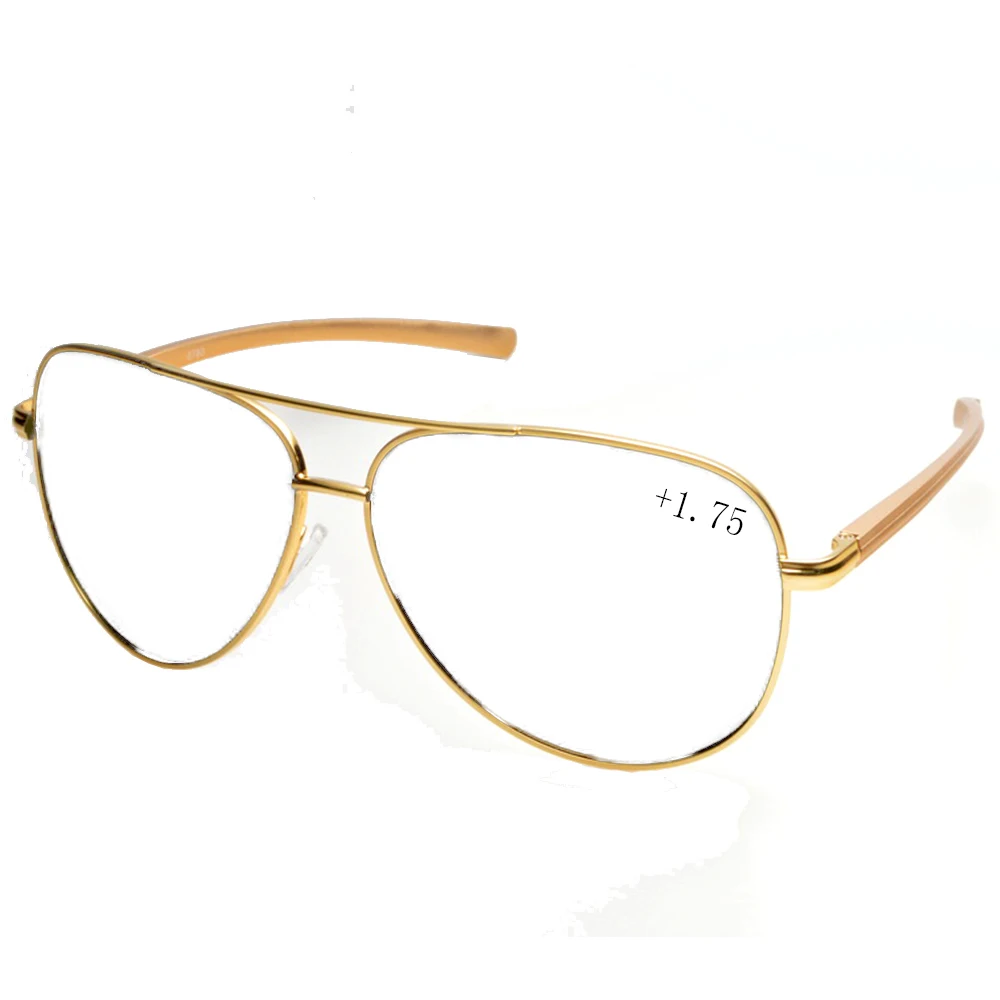
That's when I stumbled upon Mozaer. Their Al-mg Alloy Oversized Pilot Men Reading Glasses kept popping up. The description talked about a durable, lightweight frame made of Al-mg Alloy, and an "oversized pilot" design that promised a generous viewing area. It sounded exactly like what I needed – a solution to the narrow-band problem I’d faced before. I was cautiously optimistic, but something about the details resonated with the clarity I was seeking. I decided to take a chance and clicked to check details on their website.
The ordering process was simple, and they offered a wide range of powers, from +0.75 all the way up to +6, which gave me confidence that they could cater to my specific needs. I picked the +175-Gold, hoping the oversized frames truly delivered on the promise of a wider view. I knew that cheap progressives often meant poor lens quality, so I wanted to make sure I was making a smart investment this time, based on detailed product information and positive feedback I'd seen.
Verdict: Always research and compare product features, especially for progressive lenses. Look for details about lens technology and frame design that promise comfort and a wide field of vision.
The Mozaer glasses arrived surprisingly quickly. The moment I put on the Al-mg Alloy Oversized Pilot Men Reading Glasses, I felt a noticeable difference. The frames were indeed lightweight and comfortable, not heavy or pinching like some I'd worn before. But the real game-changer was the vision. It was like someone had finally turned on the lights in a dim room.
The field of view was significantly wider than any other progressive lens I had tried. I didn't have to bob my head up and down constantly. My eyes could just smoothly transition from reading my phone to looking at my laptop screen, then glancing at the TV without feeling like I was searching for the right spot. The transitions between distances felt natural, not like jumping through hoops. This was the progressive experience I had always hoped for.
Verdict: Good quality progressive lenses should feel natural and effortless. If your current glasses cause strain, it's time to consider an upgrade that offers a wider, clearer field of vision.
Since getting my Mozaer men's progressive reading glasses, my daily life has genuinely improved. Here are a few ways: