It seems like only yesterday I could read the smallest print without a second thought. Then, slowly, almost imperceptibly, I started holding my phone further away, squinting at menus, and relying on bright lights just to see. The day I admitted I needed reading glasses was a bittersweet one. It opened up a world of clear vision again, but also a perplexing question: how many pairs does one person actually need?
This question has been on my mind a lot lately. I used to think one good pair would do the trick. Oh, how naive I was! Now, I feel like I'm constantly searching for a pair, convinced I have hundreds stashed away, yet can never find them when I need them most. My home often feels like a giant game of 'hide and seek' with my readers.
My journey with vision aids started subtly. For years, I just needed glasses for distance. But as I’ve gotten older, close-up work became a real challenge. I remember getting my first pair of what I thought would be my 'all-in-one' solution: progressive lenses for driving. These were a game-changer for car journeys. The bottom part, with a +1.5 magnification, helped me clearly see my dashboard and navigate my car's controls, while the top part remained zero, allowing me to see the road ahead without any distortion. It was a clever solution, helping me manage both distance and near vision seamlessly while on the go. However, I quickly learned that one pair, even a versatile one, wasn't enough for every situation.
Soon, the need for dedicated reading glasses became undeniable. I’d be at my desk, then move to the living room to read a book, then to the kitchen to check a recipe – and each time, my glasses were inevitably in the last place I'd been. It was like they had a mind of their own, always disappearing into the abyss of my couch cushions or under a stack of papers. One day, feeling utterly frustrated, I vividly recall thinking, "I must have 500 pairs of these things, and I can't find a single one!" It’s a common sentiment, I've come to learn, a shared struggle among many of us who now rely on these optical aids.
I even know someone who's incredibly lucky, at 57 years old, still boasting perfect vision with zero corrective lenses. While I admire their fortune, for most of us, this isn't our reality. My own reality involves a growing collection. I've accumulated what feels like a whole basket full of various strengths and styles. I even have a bulk box of new readers I haven't even opened yet, a strategic purchase made with my HSA funds. It feels good to know I have backups, even if finding the right pair at the right moment remains a daily puzzle.
This constant search and the sheer number of reading glasses I've accumulated truly made me ponder: why is this such a universal experience? It's more than just losing them; it's about having the right magnification for different tasks, having them available in multiple locations, and sometimes, simply wanting a different style to match an outfit or mood. The answer to "how many pairs do you have?" for many of us, including myself, is simply: "Yes." A resounding, slightly exasperated, "Yes."
Facing the daily challenge of disappearing readers and the need for task-specific vision, I began to explore solutions. This led me to some incredibly important discoveries, not just about glasses, but about my own eye health.
One of the most significant insights I gained was the absolute importance of regular eye check-ups. It's so easy to put off that annual appointment, especially when you think your vision is just "getting old." I learned that some serious eye conditions, like ocular hypertension, don't present with noticeable symptoms. You can't feel them, but they can be silently damaging your eyes. Catching these problems early, before any real damage is done, is incredibly important. So, while buying new reading glasses is practical, making sure your eyes are healthy from the inside out is paramount. I now make sure to schedule my eye doc visits religiously, understanding that preventive care is the best strategy for long-term vision health.
My approach to acquiring reading glasses has also evolved. Gone are the days of just grabbing the cheapest pair. Now, I consider what I need them for. For example, my driving progressives are perfect for the car, but for long hours in front of a computer screen, I needed something different. That's when I started looking into anti-blue light options.
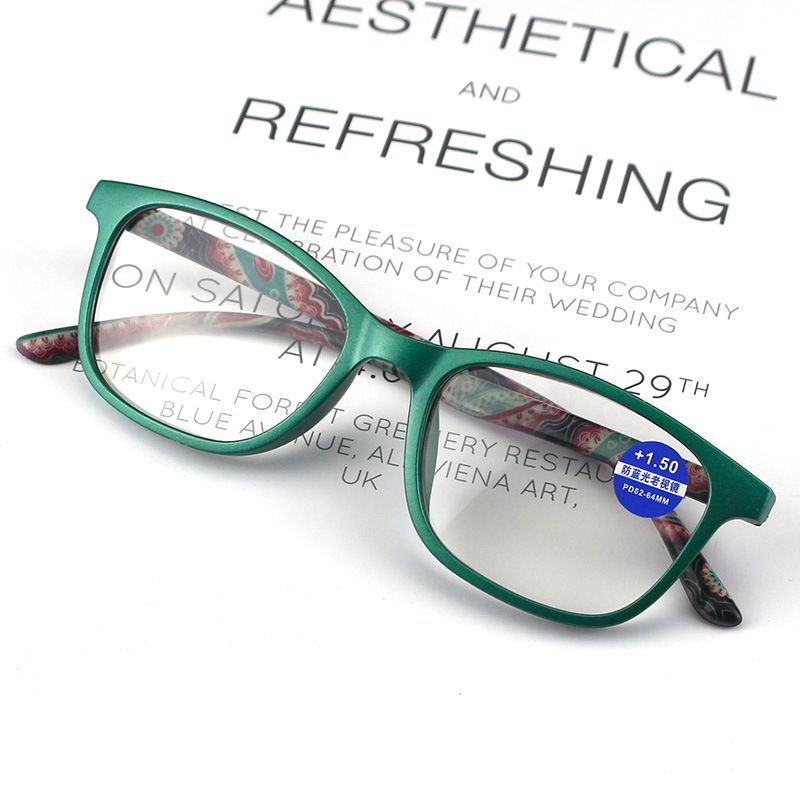
I discovered the wonderful world of specialized Mozaer Women Reading Glasses that offered exactly what I was looking for. I tried out their Vintage Ultralight Farsighted Eyewear, which quickly became my go-to for desk work and evening reading. These particular glasses stood out for several reasons. First, the vintage floral design gives them a touch of elegance that I really appreciate – they don't just feel like a medical necessity; they feel like a fashion accessory. Second, and crucially, they are ultralight. I often forget I'm even wearing them, which is a huge plus during long reading sessions or when I'm absorbed in a task. But perhaps the most important feature for my digital lifestyle is the anti-blue light coating. Spending so much time on screens, I noticed my eyes feeling tired and strained. With these glasses, I experienced a noticeable reduction in eye fatigue, and I found myself sleeping better too. They come in various magnifications, from +1.0 all the way up to +4.0, which means I could pick the perfect strength for my needs. For more quality eyewear solutions, I often check the Official Mozaer website, where I find a variety of stylish and functional reading glasses.
Investing in specific types of reading glasses for specific tasks has made a huge difference in my daily comfort and productivity. It's not about having more pairs just for the sake of it, but about having the right pairs for each situation.
Based on my own experiences and what I've learned, I've put together some practical tips to help you manage your reading glasses and maintain good eye health. It’s about being proactive and making smart choices.